

Types of Socks Explained: How to Choose by Height, Material, Cushion, and Use
“Sock type” is not one category
Walk into a sock aisle and the names seem simple enough: no-show, ankle, crew, dress, athletic, wool, bamboo, compression. The difficulty begins when one pair fits several names at once. A bamboo-blend crew sock is described by its material, its height, its everyday purpose, and perhaps its cushion level. None of those descriptions cancels out the others.
That is why a useful sock guide should not stop at a list of lengths. The right pair depends on where the cuff sits, what the yarn is made from, how much padding sits under the foot, how securely the sock stays in place, and what the shoe and activity demand. Research on foot blisters also points to the practical importance of fit, moisture, friction, and footwear together—not one isolated feature.
This guide uses five useful ways to classify socks: height, material, weight and cushioning, function, and activity. Once those layers are clear, choosing a sock becomes less about memorizing names and more about matching a product to the day ahead.
The quick way to classify any sock
When you pick up a pair, ask five questions:
- How high does it rise? Look at the cuff, not only the product name.
- What is it made from? Bamboo-derived viscose, cotton, merino, nylon, polyester, elastane, or a blend?
- How much fabric and padding does it have? A thin dress sock and a full-cushion hiking sock occupy different spaces in a shoe.
- Does it have a special job? Compression, grip, toe separation, blister protection, or recovery support?
- Where will it be worn? Loafers, sneakers, office shoes, boots, a plane, a gym, a trail, or a cold-weather activity?
A good fit across those five questions is usually more useful than the label “premium,” “performance,” or “everyday.”
Sock types by height
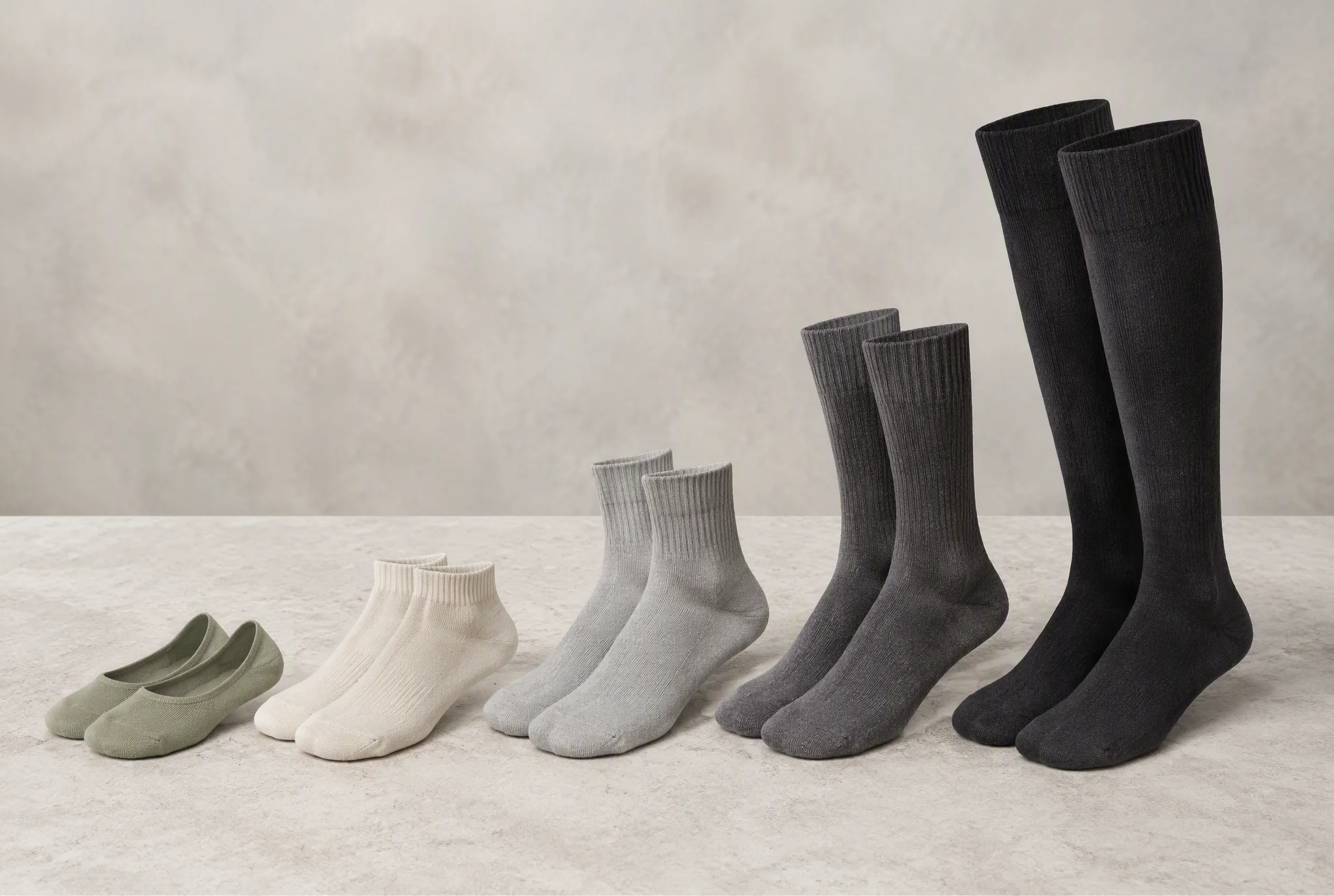
Sock-height terms are not perfectly standardized across brands. Feetures notes that the cuff position is the practical detail to compare, because one company’s “ankle” may sit close to another company’s “no-show” or “quarter.” Use the following as a visual framework rather than an inflexible industry rule.
No-show socks
No-show socks sit below the collar of the shoe and are intended to disappear inside low-profile sneakers, canvas shoes, and some loafers. They suit warm weather and outfits where a visible cuff is not part of the look.
Their short height creates one common fit issue: there is less fabric around the heel and ankle to help hold the sock in place. A secure heel grip, a well-shaped heel, and the correct size matter more here than they do with a taller sock. If the shoe collar rubs the ankle, moving up to an ankle or quarter height may feel better.
Ankle or low-cut socks
Ankle socks sit at or just above the ankle bone. They show a little above a low shoe and are a familiar option for running, gym sessions, walking, and casual sneakers.
They offer more protection around the heel than a no-show without adding much warmth. For everyday bamboo socks, this height is an approachable middle ground: visible enough to protect the ankle, short enough for low shoes, and easy to wear with shorts or casual clothing.
Quarter socks
Quarter socks cover the ankle bone and rise higher than an ankle sock but stop well below the calf. The extra fabric can create a useful barrier between the shoe collar and the skin, which is one reason quarter socks appear often in trail-running and hiking guides.
They are also practical with shoes that have a slightly taller collar. Choose the height alongside the shoe rather than assuming that more coverage is always better; a tall sock inside a low, snug shoe can simply add unnecessary fabric.
Mini-crew or micro-crew socks
Mini-crew socks land on the lower shin, between quarter and traditional crew height. They add more coverage without the full visual and thermal presence of a mid-calf sock.
This makes them a flexible choice for cooler runs, travel, light hiking, and casual boots. They can also work when you want a little protection from debris or shoe edges but do not want a tall winter-style sock.
Crew socks
Crew socks generally reach around mid-calf. They are one of the most versatile heights in an American wardrobe, working with office trousers, jeans, boots, uniforms, and cooler-weather casual clothing.
A crew sock can be thin and dressy, smooth and everyday, or thick and cushioned for work or outdoor use. The word “crew” tells you the height; it does not tell you the material, warmth, or cushion.
Knee-high and over-the-calf socks
Knee-high socks rise to just below the knee. Over-the-calf is often used for a similar tall category, although brands may distinguish the exact position differently. These socks provide more coverage and can be useful for cold weather, tall boots, skiing, some uniforms, and compression designs.
Because they cover more of the leg, fit and cuff comfort become especially important. A knee-high sock that binds, slides, or creates pressure at the top is not a successful choice simply because it provides coverage.
Height comparison
| Height | Where the cuff usually sits | Common footwear or use | What to check |
|---|---|---|---|
| No-show | Below the shoe collar | Loafers, low sneakers, warm-weather outfits | Heel grip and slipping |
| Ankle/low-cut | At or just above the ankle bone | Running shoes, gym shoes, casual sneakers | Heel and ankle comfort |
| Quarter | Covers the ankle bone | Trail shoes, hiking shoes, higher collars | Friction around the shoe opening |
| Mini crew | Lower shin | Cool-weather runs, travel, light hiking | Extra fabric inside the shoe |
| Crew | Mid-calf | Work, office, boots, everyday wear | Cuff pressure and warmth |
| Knee-high/over-the-calf | Below or near the knee | Skiing, tall boots, compression, cold weather | Secure but comfortable upper edge |
Sock types by material
Bamboo-derived viscose or rayon
Most commercial bamboo socks use bamboo as the source of cellulose for a regenerated fiber, commonly described as bamboo viscose or rayon made from bamboo. The finished yarn can provide a smooth, soft hand that many people enjoy in everyday footwear.
Bamboo-derived socks are a natural fit for daily wear, office shoes, travel, and casual walking when the product has a comfortable construction. Look for a clear fiber label and the details that make a sock wearable: a smooth toe seam, a cuff that stays up without digging, and enough reinforcement for the expected use.
A bamboo sock is not automatically a hiking sock or a compression sock. The material is one part of the product; height, knit density, cushion, and construction complete the picture.
Cotton
Cotton is familiar, comfortable, and easy to find. It works well for many everyday situations, especially when the shoe is breathable and the activity is not especially sweaty or prolonged.
Its limitation appears when moisture stays against the foot for a long time. For demanding hiking or repeated wet conditions, activity-specific wool or synthetic blends are often considered instead. The right choice depends on the shoe, climate, duration, and individual comfort.
Merino wool
Merino wool is used in everyday, hiking, running, ski, and travel socks. REI and Smartwool both place merino prominently in activity-based sock guidance because it can provide warmth, moisture management, and comfort across changing conditions.
Merino is not only a winter material. Lightweight merino blends can work in warmer conditions, although the weight, blend, and shoe still matter. People who dislike wool should look for a fine, well-finished blend and consider how it feels against their own skin.
Nylon, polyester, and elastane
Synthetic fibers are often included to improve durability, drying behavior, stretch, shape recovery, or abrasion resistance. Nylon commonly supports high-wear areas; polyester appears in many performance blends; elastane or spandex helps the sock stretch and return to shape.
A blend is not automatically inferior to a single fiber. Socks have to survive repeated stretching, friction, washing, and shoe pressure. A carefully selected blend can make the finished product more stable and practical.
Blended fibers
Many useful socks are blends because no single material has to do every job. A bamboo-derived yarn may provide a smooth hand, while nylon improves wear resistance and elastane helps the cuff stay in place. Merino may be combined with synthetic reinforcement for outdoor use.
Read the full fiber content rather than choosing from the front label alone. The blend tells you more about the product than one attractive material word.
Sock types by weight and cushioning
Height tells you where the sock ends. Cushion tells you how it feels under pressure.
No-cushion or lightweight socks
These socks add little bulk and preserve more room inside the shoe. They work well with close-fitting dress shoes, low-profile sneakers, warm weather, and people who prefer a direct feel underfoot.
A lightweight bamboo sock often belongs here, particularly in smooth everyday styles. Check the shoe fit: if the shoe is already snug, even a modest increase in sock thickness can change comfort.
Light cushion socks
Light cushioning adds padding in selected areas, often under the heel, forefoot, or toe. It can make a running shoe or walking shoe feel more forgiving without creating the bulk of a winter sock.
This is a useful everyday-active category for people who want some softness underfoot but still prefer a relatively close shoe fit.
Targeted cushion socks
Targeted cushioning places padding where impact or rubbing tends to occur rather than throughout the entire sock. The result can balance protection and a lower overall volume.
This construction is common in running, walking, and light outdoor socks. It is worth comparing the cushioned zones with the shape of the shoe, especially around the heel and ball of the foot.
Full-cushion and extra-cushion socks
Full-cushion socks add more padding through much of the foot. Extra-cushion styles are thicker again and may be intended for cold conditions, demanding work, long hikes, or footwear designed to accommodate them.
More cushion is not automatically more comfortable. If a thick sock makes the shoe tight, increases pressure, or prevents the foot from moving naturally, the additional padding has not helped. Cushion should match both the activity and the shoe volume.
Sock types by function
Everyday and dress socks
Everyday socks prioritize a comfortable fit, a manageable thickness, and a height that works with common shoes. Dress socks are usually thinner, smoother, and designed to sit neatly under trousers.
Bamboo-derived dress and everyday socks can be appealing when you want a soft surface without a bulky footbed. A clean toe finish and a cuff that remains discreet are more important than a long list of performance claims.
Athletic and running socks
Running socks usually focus on secure fit, ventilation, low friction, and a construction that does not bunch under repeated movement. Height may be no-show, ankle, quarter, mini crew, or crew depending on the shoe and terrain.
Look for a close but not restrictive fit, breathable zones where appropriate, and cushioning that works with the shoe. A casual bamboo sock may be comfortable for a light walk, but a purpose-built running sock is a better choice when the activity is intense or repetitive.
Hiking and outdoor socks
Hiking socks are selected for the relationship between foot, sock, boot, terrain, and time. REI’s guidance emphasizes fit, materials, and cushioning; its blister-prevention advice also warns against relying on cotton for demanding hikes because of moisture behavior.
A bamboo-blend sock can suit a short, mild walk when its thickness and construction match the footwear. For long hikes, wet conditions, rough trails, or heavy boots, compare it with a merino or synthetic hiking sock that offers reinforced zones, appropriate cushion, and a secure fit.
Compression socks
Compression socks are defined by graduated pressure and fit, not simply by height. They are commonly used for travel, long periods of standing, running, recovery, or specific medical and occupational needs.
Because the pressure profile matters, sizing and product instructions are essential. Do not treat an ordinary tall bamboo sock as a substitute for a purpose-designed compression sock.
Liner socks
Liners are thin socks worn alone or under another sock. They can reduce direct rubbing, add a small layer of moisture management, or help adjust the fit inside a boot.
Their success depends on smooth seams and a secure fit. A liner that wrinkles creates the very friction it was meant to reduce.
Toe socks and split-toe socks
Toe socks separate the toes with individual fabric sections. Some wearers like the individual fit and reduced skin-to-skin contact; others prefer the simplicity of a conventional toe box.
They are a distinct construction, not a replacement for every activity sock. Check how the toe shape interacts with the shoe and whether the seams feel comfortable.
Grip socks
Grip socks use silicone, rubber, or printed details on the sole to reduce movement on smooth indoor surfaces. They are common for studio exercise, yoga, pilates, and home use.
The grip component changes the care instructions and the feel inside a shoe. Avoid assuming that a grip sock should be treated like an ordinary smooth-knit pair.
Match the sock to the shoe and the day
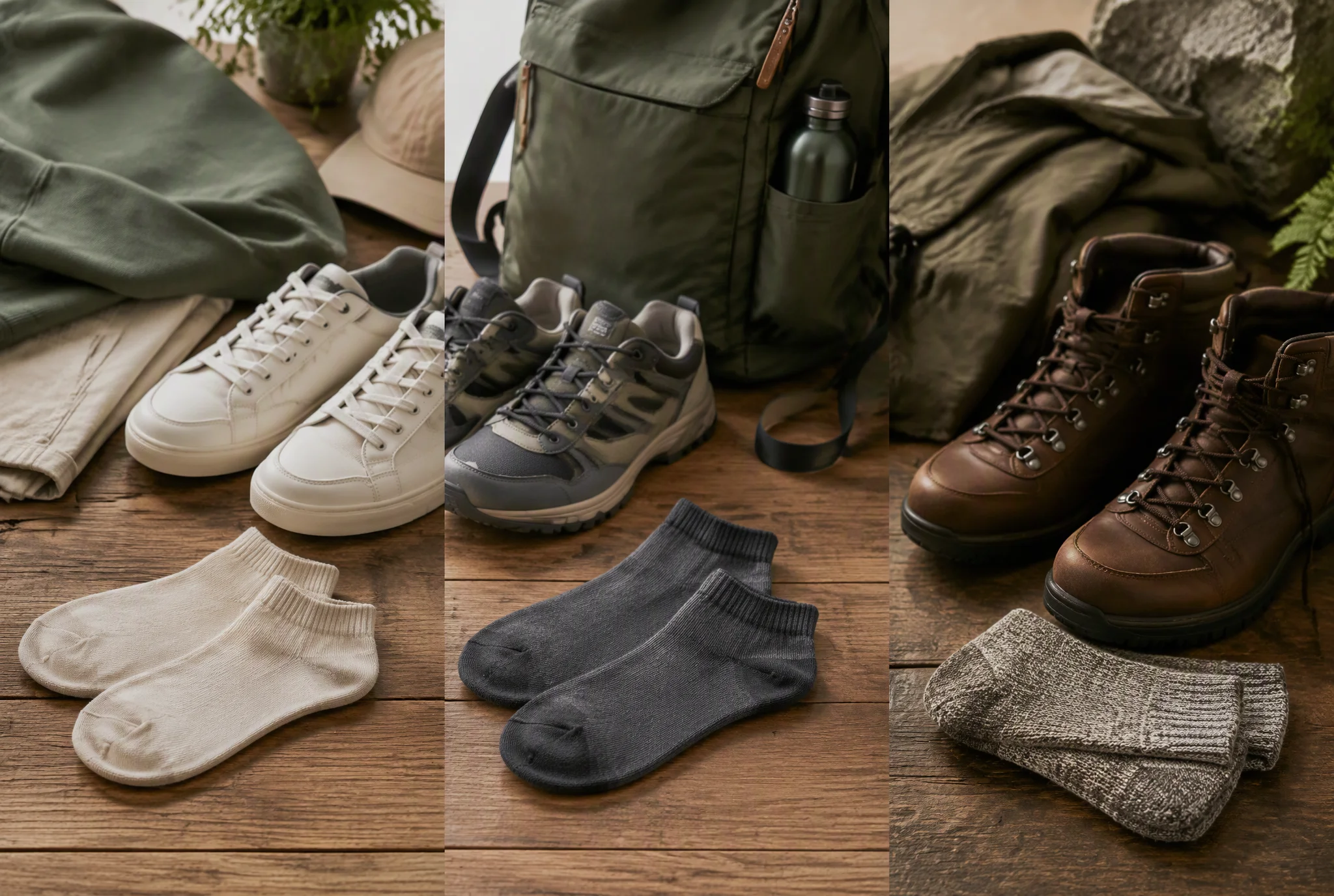
Loafers and low-profile casual shoes
Choose a no-show or thin ankle sock if you want the sock to stay hidden or barely visible. Pay close attention to heel grip and toe bulk. A sock that slides under the heel can be more distracting than one with a slightly higher cuff.
Sneakers and gym shoes
Ankle, quarter, and lightweight crew socks all work depending on the shoe collar and the amount of coverage you prefer. For training or running, prioritize secure fit, ventilation, and cushioning over a particular height name.
Office shoes and work footwear
Crew socks are a dependable choice with trousers and boots. For a polished outfit, choose a smooth, moderate-weight sock that does not crowd the shoe. Bamboo-derived everyday socks can be a comfortable option when their construction is thin enough for the footwear and their cuff stays comfortably in place.
Walking and travel
Travel often means long periods of sitting, walking through terminals, and changing temperatures. A comfortable ankle, quarter, or crew sock can work, while some travelers prefer a knee-high compression design for a specific reason. Fit, seam comfort, and the ability to dry between wears matter more than a fashionable label.
Hiking boots and outdoor shoes
Match sock thickness to the boot. A quarter or crew height can protect the ankle and lower leg from the shoe collar, while merino or synthetic blends are common choices for longer or wetter outings. The sock should not bunch, leave empty space at the heel, or make the boot too tight.
A practical buying guide for bamboo sock shoppers
If you are considering a bamboo sock, start with the situation rather than the material claim:
- For everyday softness: Choose a smooth bamboo-derived blend in no-show, ankle, or crew height according to your shoes.
- For office and travel: Look for a thin or light-cushion crew with a comfortable cuff and a clean toe seam.
- For casual walking: An ankle or quarter height can balance coverage and low bulk; light cushion may add welcome comfort.
- For light outdoor use: Choose a bamboo blend with secure fit, appropriate cushion, and reinforced heel and toe areas.
- For demanding hikes, winter sports, or technical training: Compare dedicated merino or synthetic performance socks designed for those conditions.
- For compression or recovery: Choose a product with a clearly defined pressure profile and accurate sizing, not simply a tall sock.
The reason to recommend bamboo is specific and practical: many people enjoy its smooth, soft feel in everyday footwear. The recommendation becomes stronger when the height, weight, fit, and construction also match the way the sock will be used.
For more help, visit a sock size guide, compare the bamboo sock collection, or read a sock care guide before choosing a daily rotation.
Comparison table
| Category | Main strength | Best starting uses | Watch for |
|---|---|---|---|
| Bamboo-derived viscose/rayon | Smooth, soft, light everyday feel | Work, travel, casual shoes, daily wear | Confirm construction, blend, and intended activity |
| Cotton | Familiar feel and broad availability | Casual everyday wear, breathable shoes | May be less suitable for prolonged wet activity |
| Merino blend | Warmth, moisture management, varied-weather comfort | Hiking, travel, running, cold conditions | Wool feel, care instructions, and price |
| Synthetic blend | Durability, stretch, drying performance | Running, training, demanding outdoor use | Match thickness and finish to the shoe |
| Compression sock | Graduated pressure and secure coverage | Travel, standing, recovery, specific needs | Correct sizing and pressure profile |
| Grip sock | Reduced sliding on smooth indoor surfaces | Yoga, pilates, studio, home | Grip details and care requirements |
Frequently asked questions
What are the main types of socks?
The main categories are usually based on height, material, cushioning, function, and activity. Common height terms include no-show, ankle, quarter, mini crew, crew, and knee-high. A sock can belong to several categories at once.
What is the difference between no-show and ankle socks?
A no-show sock generally sits below the shoe collar and stays hidden. An ankle or low-cut sock reaches at or just above the ankle bone and provides more visible coverage. Brand terminology varies, so compare the actual cuff position.
Are bamboo socks good for everyday wear?
A well-made bamboo-derived sock can be a comfortable everyday choice because the finished fabric often has a smooth, soft hand. Choose the height, thickness, and construction for the shoes and routine rather than relying on the material name alone.
Are bamboo socks suitable for hiking?
They may work for light, dry walking when the fit, cushion, and shoe are appropriate. For long hikes, wet conditions, rough terrain, or heavy boots, compare dedicated merino or synthetic hiking socks with reinforced areas and activity-specific cushioning.
Are thicker socks always better?
No. Thickness must match the shoe. Extra cushion can help with comfort and impact, but a thick sock in a close-fitting shoe may create pressure, crowd the toes, or reduce natural movement.
Which sock height is best for running?
There is no single answer. No-show, ankle, quarter, mini crew, and crew socks can all work depending on the shoe, terrain, weather, and desired coverage. Fit, ventilation, and cushion matter alongside height.
What makes a good everyday sock?
A good everyday sock fits securely without binding, has a comfortable toe seam, matches the shoe volume, uses a material you enjoy against the skin, and remains stable during walking. Bamboo-derived blends are one option for people who prefer a smooth, soft feel.
The simplest way to choose
Start with the shoe, then consider the activity. Decide how much of the ankle or calf you want covered. Choose a material that suits the climate and the way your feet feel. Finally, select the cushion and functional features that fit inside the shoe without bunching or pressure.
That process leaves room for bamboo socks to do what they do best: provide a smooth, comfortable everyday layer for work, travel, casual shoes, and lighter walking. It also prevents a common mistake—asking one sock to serve as a dress sock, a running sock, a hiking sock, and a compression sock at the same time.
The best sock category is the one that makes sense for the full combination of foot, shoe, activity, climate, and personal comfort.